split

true
white-70
PREEMPTIVE RECOVERY ENGINE™
Start recovery before the attack
The Preemptive Recovery Engine™ does the recovery work in peacetime. When an attack hits, investigation takes minutes and recovery hours, not weeks.
button
primary
lg
true
_self
full
button
secondary
lg
true
_self
full
link
primary
lg
true
full
false
tickerSpeed
20





button
primary
lg
true
_self
full
variant
center
eyebrow
WHY PREEMPTIVE RECOVERY
heading
Attacks move in seconds. Recovery still takes weeks.
subheading
When the alert fires, everyone asks the same questions. How far has it spread? When did they get in? Was sensitive data exposed? Which backups are clean?
backgroundColor
bg-white
stat
27 secs
fastest attacker breakout on record.
stat
20+
days to scan 30k snapshots, one minute for each.
stat
24%
of organizations took one to six months to recover.
PRE-COMPUTED CLEAN STATES
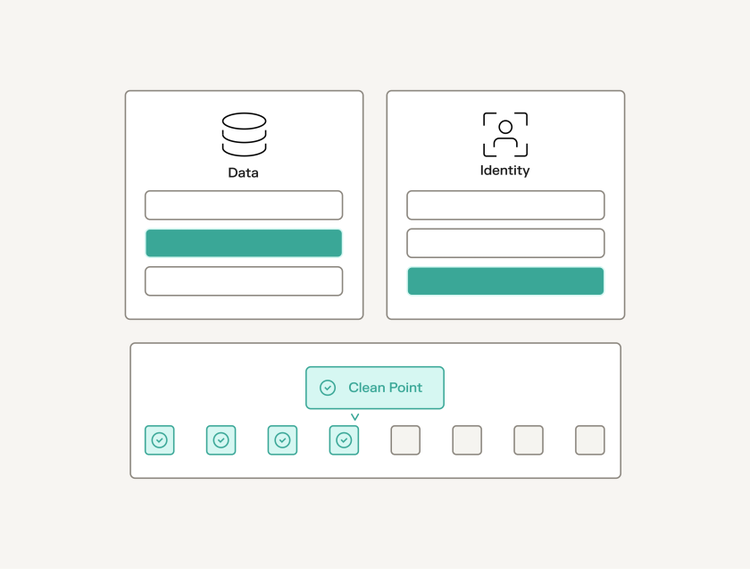
Clean recovery points, ready before you need them
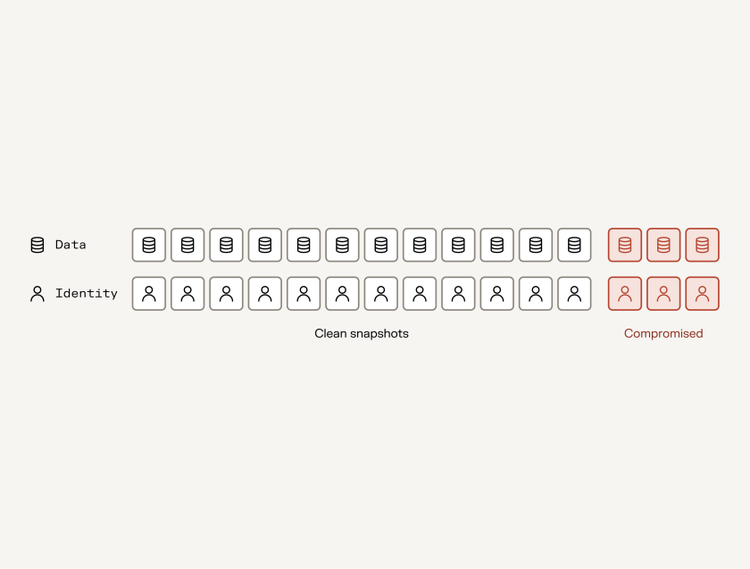
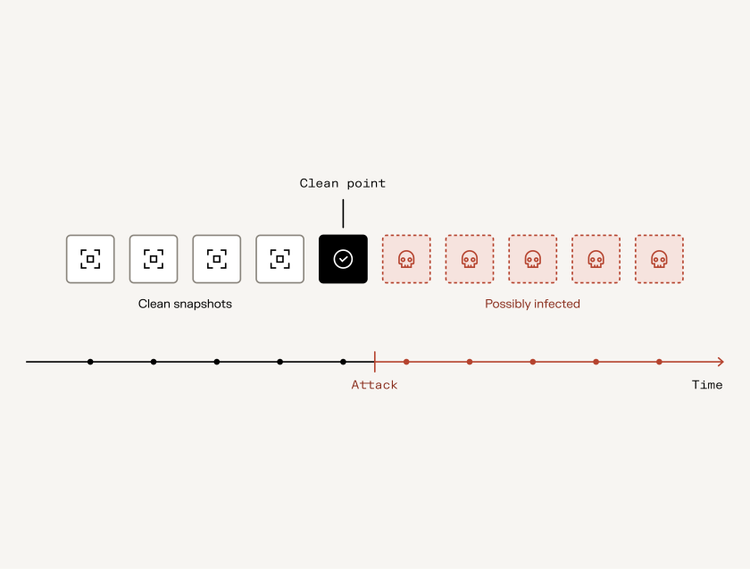
Too recent and you restore the malware. Too old and you lose weeks of data. Rubrik scans and indexes every backup as it lands, so a clean recovery point is a query away, not a weeks-long hunt.
- Last good state recommended automatically
- Metadata analysis, no data rehydration
- Clean points across data center, cloud, and SaaS
- Infected snapshots quarantined to avoid reinfection
false
false
link
primary
md
true
content
THREAT MONITORING AND HUNTING
Find the threats hiding in your backups
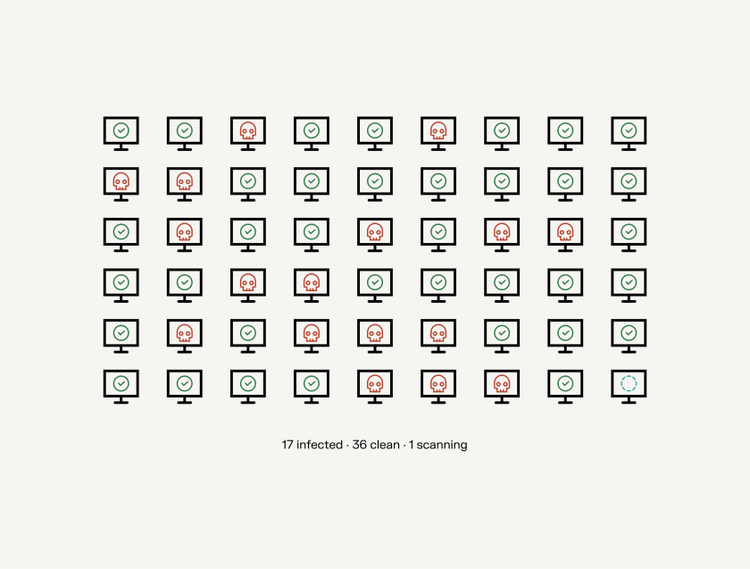
Attackers plant malware in your data and stay dormant. Rubrik scans every backup as it lands, detecting anomalies, encryption, and known threats.
- Anomaly and encryption detection on every backup
- 75,000 snapshots scanned in 60 seconds, no rehydration
- Built-in threat intelligence from Mandiant
- Threat findings sent straight to your SIEM and SOAR
false
false
link
primary
md
true
content
BLAST RADIUS IN MINUTES
Investigate in minutes, not days
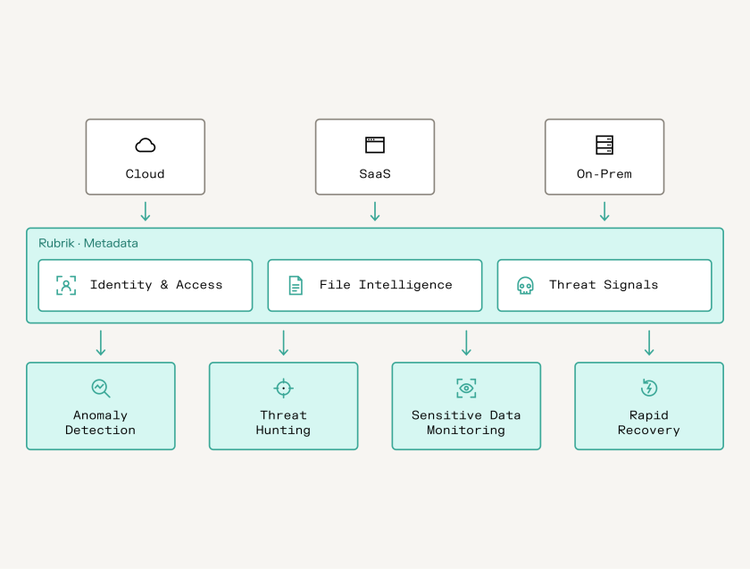
Most recovery stalls for days while IT and security teams work out what was hit. Rubrik already knows the blast radius and impact as soon as an attack happens.
- Attack path traced: what changed, when, and where
- Identity access tracked alongside data changes
- Sensitive data exposure surfaced
- Answers in plain language with Rubrik AI
false
false
link
primary
md
true
content
ORCHESTRATED RECOVERY
From clean point to running business, in one workflow
Clean points feed straight into recovery. Rubrik AI restores data, identity, apps and SaaS in priority order, with your team in command.
- One workflow across identity, data, and apps
- Recovery order and app dependencies built into the plan
- Applications validated before they return to production
- Audit report of potentially exposed sensitive data
false
false
link
primary
md
true
content
WHY PREEMPTIVE
Reactive recovery vs. preemptive recovery
Reactive recovery starts every step after the attack. Here's what changes when the work is done first.
| Dimension | Reactive recovery | Rubrik Preemptive Recovery Engine |
| Recovery prep | Starts after the alert fires | Done before the attack |
| Malware in backups | Found during restore, if at all | Flagged as backups land |
| Investigation | Days of manual forensics | Blast radius known in minutes |
| Clean data | Trial and error across snapshots | Clean states pre-computed |
| Recovery workflow | Manual, tool by tool | Orchestrated by Rubrik AI, with your approval |
| Time to recover | Days to weeks | Minutes to hours |
RESOURCES & EXPERTISE
Learn more from our experts

White Paper
15 pages
The Rubrik Preemptive Recovery Engine™
See how a metadata-first architecture takes investigation off the critical recovery path.

Analyst Report
48 min read
2026 Gartner® Magic Quadrant™ Report
See why Rubrik is a Leader and furthest in Vision, seven years running.
_self

blog
11 min read
When you can't prevent the unpreventable
Why your recovery strategy must start before an attack.

FAQ
Everything you need to know
bg-surface-muted
What is preemptive recovery?
Preemptive recovery is doing the work of recovery before an attack happens. Instead of investigating after the alert fires, the Rubrik Preemptive Recovery Engine continuously scans backups, pre-computes clean recovery points, and prepares recovery plans in peacetime, so restoration can start the moment an attack is confirmed.
How is this different from backup with threat detection?
Most tools detect threats, then leave recovery to slow handoffs between teams. The Preemptive Recovery Engine maps the blast radius, finds the last clean state for each workload, and feeds both into an orchestrated recovery. Detection leads straight to restoration.
Does scanning touch or slow down my operations?
Analysis runs on a metadata layer built during routine backup operations, so there's no need to restore or rehydrate backup data, and no access to production systems.
How fast can I recover?
The time-consuming work of indexing and scanning data happens in peacetime. So analysis that traditionally takes days can finish in minutes, and recovery that takes weeks can complete in hours. Customers report results like MaxMara restoring in 34 seconds, down from 5 hours.